Tuesday, November 11, 2014

Happy Birthday, Mr. Vonnegut

Kurt Vonnegut's U.S. Army portrait

Happy birthday, Mr. Vonnegut! Kurt Vonnegut is one of my favorite writers, but he's also one of my favorite humans. Too often I'll have the utmost respect for an artist's work but feel the bile belches coming up my throat when I think about the artist's personal life. See: Woody Allen.

Vonnegut died a few years ago. So it goes. I will forever be inspired by his soul. Especially today and every November 11th, on both Vonnegut's birthday and Armistice Day, the day the participants in The War to End All Wars chose peace. So fitting for a humanist pacifist such as Vonnegut. Here's one of my favorite Vonnegut quotes, from his 1973 novel Breakfast of Champions:

"I will come to a time in my backwards trip when November eleventh, accidentally my birthday, was a sacred day called Armistice Day. When I was a boy, and when Dwayne Hoover was a boy, all the people of all the nations which had fought in the First World War were silent during the eleventh minute of the eleventh hour of Armistice Day, which was the eleventh day of the eleventh month.

"It was during that minute in nineteen hundred and eighteen, that millions upon millions of human beings stopped butchering one another. I have talked to old men who were on battlefields during that minute. They have told me in one way or another that the sudden silence was the Voice of God. So we still have among us some men who can remember when God spoke clearly to mankind."

Tolkien and Post-Traumatic Growth

Happy Armistice Day!

"Tolkien 1916". Licensed under Public domain via Wikimedia Commons - http://commons.wikimedia.org/wiki/File:Tolkien_1916.jpg#mediaviewer/File:Tolkien_1916.jpg

One veteran of World War I--J. R. R. Tolkien, author of The Hobbit and the Lord of the Rings series--used his traumatic experiences in the war to create amazing works of literature. Hank Green calls it "post-traumatic growth". Green explains it in this fascinating episode of Crash Course Psychology:


Monday, November 10, 2014

Step Stool Sister

Thatcher (12), Annie (7 months), Sawyer (12)

Our cat Thatcher, and our puppy Annie got all excited when they saw a neighborhood cat outside in our front yard. Evidently our old dog Sawyer couldn't care less. She's been roommates with various felines over her twelve long years as the sweetest dog on the planet. She simply cannot be fazed by one more cat. I imagine Sawyer saying to her fur-brother and fur-sister, "Big deal. Wake me up when there's something worth looking at." Sawyer is so hardcore into her nap, she doesn't even mind being a step stool for her baby fur-sister.


Friday, November 7, 2014

Coach Carleton: First Night of Practice

Well, I didn't finish the Universal Class on How to Coach Youth Basketball before it was time to head to our first practice last night. You didn't really think I would, did you? We had fun anyway. And that's the goal.

It was my first time coaching, ever. Our eight-year-old, Katie, wanted to join a team. Soon after we signed her up, the league sent me an email asking if I could coach. Assuming other parents with more experience would volunteer, I said, Sure, sure. Sign me up. I've never coached. I haven't played basketball in thirty years. I probably haven't even watched a basketball game in at least a decade. But sure, if no one else can do it, sign me up.

Nube mistake number one. Never say yes when you really mean are you fucking kidding me?

Fortunately for me, when I'm on my meds and keeping my symptoms of PTSD at bay, I'm quite adventurous. I'll try anything (that will cause no harm to anyone) once. What harm could I do to these eleven third-grade girls? I figure the worst that can happen with me as a coach is we won't learn the rules, but no matter what, we'll have fun.

When we arrived at the gym there were already several girls running around shooting hoops. An incorrigible procrastinator and usually late to everything, I had thought arriving ten minutes early was good, but evidently my team leans uber-punctual. When the other couple of girls arrived, we sat in a circle in the middle of the gym and talked.

"When are we going to start practicing?" one of the girls whined.

"We are practicing. This is the first part of building a team," I explained. She didn't roll her eyes at me, so I marked that one a win.

"I want us to get to know each other so we can be a great team. I'm gonna ask you some questions about yourself, and we'll go around the circle and answer. I'll start," I said.

I told them that it was my first time coaching, but I was excited, and that I had played basketball on a couple of teams when I was a girl, so I know what it's like. I told them that I'm Katie's mom and Will's wife, that I work at the library and I like working with kids.

"And the one thing I want to get out of this experience is to have fun," I said, smiling. Surprisingly, they all smiled back. Beamed really. I'm lucky I got assigned to coach third graders rather than eighth graders. Too much teenage angst might trigger my anxiety.

We went around the circle and each girl gave their answers. Their name, what school they go to, have they played on a team before, and if so, how many years? That sort of stuff. The answers got more exciting after I asked them the two BIG questions:

The first big question was: "What do you want to get out of this experience, by the end of the season?"

I wanna have fun!
I wanna see how many goals I can shoot!
I wanna see how fast I can run across the court!
I wanna do my best and have fun!
I wanna make friends!
I wanna shoot more hoops!
I wanna do my best and have fun! (The copycat is my kid.)
I wanna have fun! (It was clear the girls were running out of ideas until...)
I wanna make friends and learn how to SLAM DUNK!

We all giggled at that last one.

"Well, that's a lofty goal," I said.

"What's lofty?" Slam Dunk Girl said.

"It's a big goal, something that will take you years of practice to achieve," I explained.

Slam Dunk Girl's shoulders sank.

"But it will be fun to watch you practice! It probably won't be this year, but I'd love to see you slam dunk some day!"

Slam Dunk Girl sat up straight and proud, smiling wide.

The second big question was: "What kind of coach would you like me to be?"

Funny!
Hilarious!
Nice!
Nice, but make us work hard!
Nice and encouraging!
Honest, reliable, smart! (Guess which weirdo kid said that? Yep. Katie.)
Nice, and you can help us learn more!

I have a feeling that interviewing these girls about what they want to get out of being on a basketball team, and what kind of coach they want me to be, will be just as important as studying the rules of the game.

Still, though, I need to figure out the basics. It's two points per shot, right? What I remember most from playing basketball on a team when I was a kid was the fun, not the rules. Hopefully the girls and I will learn just enough of the rules that we'll feel comfortable and have fun.

After our mini group therapy session in the middle of the court, Will and I had the girls do dribbling drills where they weave in and out of the cones, shooting drills from both the left and the right, and passing drills.

Probably the harshest thing I said to one of the girls all night was, "Remember, you're passing the ball to your teammate. You want her to be able to catch it so she can score a point for the team. Yeah, it's cool that you can bounce the ball over her head, but that's not gonna help the team win."

No crying. No yelling. No one yelling "hustle!" No one pointing at me and laughing. It was about as chill a practice as I could imagine.

When we were picking up our coats to leave, I asked Katie if she'd give my first day of coaching a thumbs up or not. She said, "A quadruple thumbs up!"

That was awesome, but my kid's partial to me. The best compliment I got was as we were leaving the gym, one of the girls said to me, "You're a really nice coach!" My heart exploded with joy.

One more practice and then we'll have our first game. I'm excited.


Coach Carleton: The Beginning, Before the First Practice

My husband Will took a photo of me wearing my Halloween costume so I could Facebook-fish for compliments. In the caption I asked my friends to guess who I was.

"A sexy librarian" was the top pick, which made me smile, since that's what I was going for. I basically wore my day-to-day wardrobe of a cardigan over a dress, knee high socks, and clogs, with my hair up in a messy bun held together by a pencil. Only, to make it "sexy," I wore an industrial strength push-up bra, size 42DDD, mind you, and a tight dress. 

That's one good thing about having a Venus Figurine body type: slap on a fancy bra and a tight dress and you're ready to go out for the night. No need to fuss over your hair or makeup. Manicures and pedicures? Don't waste your money. You really think people are going to be looking at your hair and nails and not at your monumental mammary glands? Haven't you seen that episode of SNL where the women evolved to have eyes on their breasts so men would finally look them in the eye? 

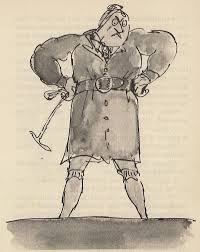
Not everyone agreed with the "Sexy Librarian" guess, though. One friend suggested I looked like someone else, someone I never would have thought of: the awful Miss Trunchbull from Roald Dahl's Matilda.

Sexy Librarian or Miss Trunchbull?

Ouch. Just when I start feeling sexy, I'm compared to that monstrous hag? I'm stocky, yes. I wear knee high socks like Miss Trunchbull, yes. But I'm no monster. I'm about as much of a stern disciplinarian as Miss Honey. Not at all like the sadistic headmistress who abuses children--the one my friend thought I had dressed up as for a kid's holiday.

Miss Trunchbull from Roald Dahl's Matilda
image source

I can kind of see it, now that she mentions it. I've been a librarian for twenty-one years, and just recently I was picked to volunteer to coach my third grade daughter's basketball team. No, stop laughing. I'm serious. Yes, they most certainly are that desperate, and yes, I do have delusions of grandeur so much I'm willing to try anything once. Remember? I'm the spiritually ambivalent non-churchgoer who somehow got suckered into joining a progressive Presbyterian church with my daughter last year. I absolutely love it. Now they've got me teaching Sunday School. I keep telling them that the kids know more about the Bible than I do, that they are teaching me more than I am teaching them, but they don't seem to have a problem with the concept of an adult learning from a child.

Katie, age 8, third grade.

Katie just finished "basketball school" and now she's ready to join a team.When the league emailed the parents to beg for a coach, I half-jokingly agreed, but I explained that I haven't played basketball in thirty years. I probably haven't even watched a game in a decade. Generally, when my Facebook timeline blows up with images and videos and conversations about most sports, I close my screen and pick up a book. I've always thought sports were more fun to play than to watch.

I used to be a great basketball player. I was on the all-star team two years in a row, and in seventh grade I won the layup contest by making 24 out of 25 baskets.

I had to quit basketball because of my boobs. Not because I'm a woman who has boobs in general. Just my boobs in particular. You see, I was an extremely early developer. I got my first bra in third grade. By high school I looked less like a baller and more like a Babushka. I had to quit playing basketball because my swollen breasts hurt every time I'd run down the court. Either there weren't sports bras back then or my mom didn't know about them, because when I finally told my mom about how much it hurt to run, she said it was OK for me to drop out.

I've played a game of HORSE here and there over the years, but for the most part, I haven't played basketball since I was 13, thirty-one years ago. I'm still fairly active in my own middle-aged way. I even own a sports bra now. I walk around the neighborhood, with my dogs, at the dog park. I play games with our eight year old in the back yard. I take walking breaks at work. I'm not a total slacker.

By the looks of my body, you'd think otherwise. I've been back on sertraline, used to treat my post-traumatic-stress-disorder and clinical depression, for about a year now. I feel more alive, more like myself. I love it. I never would have had the energy to get out of bed and coach a girl's basketball team, and teach Sunday School, and work at the public library, if it weren't for my meds. But I've gained almost thirty pounds, which is a lot on any frame, but especially a lot because I was already fat. My weight keeps creeping up over the years no matter how much exercise I get or how much food I eat or how many carbs or protein or fat or sugar or anything is in the food I eat. My doctor and I know weight gain is a side-effect of this medicine that makes me feel alive, and my weight gain hasn't hurt my good biometric ratings. My blood pressure, glucose, and cholesterol are all within the healthy range. I might look pudgy and quite wobbly running along the sidelines, coaching my badass baller girls, but hopefully they can soon learn that health comes in all sizes and Coach Carleton will prove it.

Being a Health At Every Size activist these last three years, I'm not supposed to worry about my weight gain. I know better. I should practice what I preach. But body acceptance is hard in our culture. When I pull on a slightly tight t-shirt and sweat pants and a hoodie I have to give a pretty good heave to zip up, I worry what people will think when they see me. I love my body. My husband loves my body. My daughter is thankful for my body and loves it. Why should I care if a bunch of 3rd grade girls and their parents think my body is uncoach-like? One of the tenets of the Health at Every Size philosophy is to move your body in pleasurable ways. Not when you're ten pounds thinner. Not when you're fifty pounds thinner. Now. Right now.

That's my personal goal. This basketball season, I would like to learn to feel good about my body, to move my body in pleasurable ways in public, away from the safe walks around my neighborhood and under the sheets in bed with my husband. I'm ready to start coaching these impressionable young girls on not just how to play a game and love it, but how to feel good about your body. Right now. Growing up is hard. Bodies change at different rates. Lots of kids get pudgy around third grade, or else they can't put any meat on their bones no matter how many seconds or thirds they take at the dinner table. It shouldn't matter. Fat kids. Skinny kids. All kids should know they are allowed to have fun with their bodies.

So as of today, you can call me Coach Carleton, or, Becky the Baller Librarian, if you're not into that whole brevity thing.


A Baller Librarian, that's me. So I see my friend's point about my Halloween costume. Miss Trunchbull looks like a Baller Librarian. Only the scary old-fashioned stereotypes of the cranky, shushing librarian and the gruff, verbally abusive coach. 

I'm ready to reinvent what it means to be a badass Baller Librarian. I told a friend at work, who was chuckling at the idea of my nerdy ass coaching a bunch of little jocks that, just as I never shush people at the library, I will never yell at any of the girls to "hustle" on the court. Hustle. When I played, from age 11-13, I always hated it when my coach would yell, "hustle!" I felt like yelling back, "Damn, old man! Why don't you get out here and run beside me and see how much hustle you've got in you?"

Like I do at the library with noisy patrons, I'll approach a girl who seems like she hasn't got much hustle left in her, and we'll have a conversation, instead of me embarrassing her in front of a crowd.

At the library:

"Sir, some other library patrons have been complaining about the noise around here. Please be considerate of those around you..."

On the court:

"Chin up! It's a game, not an endurance test. Are you having fun? Do you think your teammates are having fun?" You know, that kind of uplifting affirmation type shit that calms kids down instead of the yelling approach, which heightens anxiety.

I'm going to be an empathetic coach. I have one goal: to have fun. Our team might never be basketball stars--heck, with me as a coach, we might never learn all the rules--but we'll have fun. 

So, how do we get to that point? First, I need to learn the basics of how to coach youth basketball before I can evolve into an empathetic coach. Because I am a librarian, I know how to find information. Haven't played basketball in thirty years, yet somehow got wrangled into coaching your kid's team and you have no idea where to start? Just ask a librarian. We'll point you to where you need to go.

Me, age 13
1983-1984, seventh grade girls' basketball

I found a self-paced online class through the library. It's called Universal Class, and through my library you can access it for free with a library card anywhere with internet service.

Today's the first day of practice, so naturally I haven't finished the course. In fact, I've only gotten through the introduction. I like it already. Which is why I'm taking it in so slowly. That, and I'm a natural procrastinator, so if I don't get through the whole course before I have to go coach tonight, and I royally screw something up, I can blame it on my ignorance of the subject matter due to a lack of time spent studying it instead of just my innate slacker awkwardness whenever I find myself in any sort of leadership role.

What I like best about the online class, so far, is that I feel like the teacher has empathy for my plight. Right from the beginning:

"Your child has just come home and starts talking to you about how much they want to join the basketball team. Tryouts are next week. They are waving a brightly colored flier in one hand and looking at you with those big excited eyes. All you want to do is take your shoes off, check your messages and have dinner. But, your offspring is relentless...They will work extra chores and be nice to their siblings. You know this won't last, but you succumb anyway...

"You start filling the forms out and notice a block on the bottom of the page asking if you are interested in becoming a coach. You think to yourself, 'Do they have a coach? Surely they wouldn't have tryouts without a coach.' Well, they do have a coach, but he is ready to retire the woman taking the registrations tells you, because he's tired and wants to enjoy his golden years while he can.

"You look over the box again and again, then look at your excited child and tell the woman that if they absolutely can't find anyone else, you'll consider it. Guess what? You get a phone call within three days asking you to become the coach, because they couldn't find anyone else."

--From "How to Coach Youth Basketball on Universal Class.

Amen! This teacher knows what I'm in for. Better get back to class.

Saturday, November 1, 2014

A Suffragette's Home

Go vote! Where? Here. Do it for our suffragette grandmothers. Complacency has no place in a woman's home.

suffrage poster (source)

Friday, October 31, 2014

Grace Skywalker

I'm not a crafter. I'm not a DIYer. I'm not creative in the kitchen. Usually, when I see posts of cute Halloween party ideas, I take a moment to say to myself, "Aww" and then keep scrolling down my feed. But a few months ago I saw something that caught my eye:


"Even I could do that. How hard is it to shove pieces of candy corn into a banana?" I said to myself, filing away this idea in the back of my mind.

So when it came time to prepare for Katie's school Halloween party, I bought a bunch of bananas, a couple of bags of candy corn, and signed up on the list of Room Parents who are bringing treats, patting myself on the back the whole time for my awesome display of graceful domesticity.

I decided to start making the candy corn on the cob about an hour before Katie's class party started. My husband Will, who is naturally more talented in the domestic realm than I am, advised that I prepare them ahead of time, but I didn't want the bananas to turn brown. Who wants to eat rotten candy corn on the cob, dear?

Of course the project failed miserably. The bananas were too mushy or the candy corn was too hard. I tried to mold the mushy banana around the candy corn, but it just made it worse. This is what it looked like when I finally gave up:

My attempt at making candy corn on the cob 

By that time, I had about thirty minutes to come up with something else to take to Katie's class party. I ran to the store, bought some sugar cookies with orange icing and black sprinkles, some clementines, and as many bags of Snickers bars my arms could carry. It wasn't until I got to my car that I remembered there is a kid with a peanut allergy in Katie's classroom, so the Snickers would have to stay home. They could be my reward for at least attempting to be crafty this year.

Looks like the trick-or-treaters coming to my door tonight will be lucky. At least the non-allergic ones. Turns out I don't need bags of Snickers bars to feel rewarded. As the kids in Katie's class were starting to pack up after the party, a little girl named Grace, who was dressed as Luke Skywalker, saw me putting the lid on this pathetic concoction I ended up bringing just in case there weren't enough other treats:

I call this treat the "I Give Up"

"Did you make that," Grace Skywalker asked.

I seriously debated lying to the child. "Uh, yeah," I replied, scrunching my face so she'd know even I know it's a pathetic concoction.

"Oh, thanks! That was delicious!" Grace said.

I smiled all the way home.

Happy Halloween! May the Grace be with you.


Tuesday, October 28, 2014

The Marrying Type

Will and Me on our tenth wedding anniversary, October 22, 2014

I'm in love with my husband. I know: crazy, right? Who'd have thought I was the marrying type? I'm a feminist, for Goddess' sake. I don't need a man. 

It's true. I don't need a man. Not just any ole man. I need Will. And I'm slowly learning how to talk myself out of experiencing a panic attack when I say that. I hate to need. Need means weakness. Need means powerlessness. A feminist who admits she needs a man is like a fish who admits she needs a bicycle. Yet somehow I've found myself peddling along happily with my fins.

What has happened to me? How could an independent, free-spirit like myself end up married of all things? When, in my twenties, my therapist once told me that I needed to visualize happiness, I needed to imagine what a happy life would be, what I pictured for myself was not a ranch in the suburbs with a husband, a kid, and three pets. I pictured myself alone in my urban loft apartment, stroking my lap cat in between moments of pounding out fantastic, important novels on the keyboard of my computer. Or sitting alone in a field under a solitary tree with a notebook on my knee, writing my stories out long-hand, all Alice-Walker-like. Not hurriedly churning out my thoughts on a blog before it's time to pick the kid up from school, greet the husband at the door, and make dinner for the whole family.

But I'd take hurriedly churning out my thoughts on a blog and the tasks of motherhood and wifery over insecurity and loneliness any day. What I hadn't imagined back in my youth is that a stable family life would enable me to be who I want to be. The examples set for me growing up were my dad selfishly controlling my mom and my mom shifting between miserable acquiescence and plotting ways to get out.

I sometimes think I'd like to write full-time, to put all of my energy and efforts into writing an important novel, ignoring my family, ignoring the housework, ignoring my job at the library, ignoring my Sunday school class, ignoring my pets and all the responsibilities that keep me away from sitting down to write. But I suspect if I did solely focus on my writing, it would drain me. All that me-time. Sometimes "me" is too much.

I respect Virginia Woolf's opinion that a woman needs a room of her own, but I'm also not a rich woman who can afford to hire people to cook and clean and care for my family while I practice my art all day locked up in my room. I like to think my writing is important. But so are the dishes. So is my husband. So is our kid. So is feeling needed.

Not to be all "nanny nanny boo boo" about it, but sure, Woolf had a room of her own to read and write and think her important thoughts, but a lot of good it did her when she was floating face down up the river. I admire writers such as Woolf, and I like to emulate their art, but, as a person prone to depression myself, I'm trying my hardest not to emulate their life. Call me crazy, but I want to practice my art while simultaneously not killing myself.

It's hard. I'm sensitive. Intense. Into ideation more than completion. I have, what I've been told, an artistic temperment. Don't all creative types?

Nope. Not Will.

A fellow ENFP friend shared a link to this good summary of the Myers-Briggs type. I see myself in all of it, but especially this part:

"ENFPs are fiercely independent, and much more than stability and security, they crave creativity and freedom." At first, I thought to myself, nuh uh, Will's stable and secure, and I crave him. 

Then it hit me: Will gives me the freedom to creatively express myself because of his support. I married a man who encourages my creativity, and gives me the ultimate freedom that comes from feeling securely and stably loved. I'm serious. Will's the real deal.

Will and me on our wedding day, October 22, 2004

Will and I recently celebrated our tenth anniversary. It's a cliche to say "I can't believe it," but it's true. I never thought I'd make it ten years with anyone. I'm incredibly good at fucking things up and running people off. But not Will. Will stands firm. He's going nowhere, even when I'm going crazy. I can lie in bed in a depressive slumber for a week, or come home from work and take my bad mood out on the people I love, and somehow, for no reason, because he loves me, Will never flees.

Will and me on our ninth wedding anniversary, October 22, 2013

"In sickness and in health," Will repeated after the Judge a decade ago, and he still means it.

Will and me on our eighth wedding anniversary, October 22, 2012

Will and me on our seventh wedding anniversary, October 22, 2011

Will and me on our sixth wedding anniversary, October 22, 2010

Will is an ISTJ. I am an ENFP. Our opposite personality pieces pull together to make us whole.When I am with Will, I don't feel so off-balance. I feel safe. Secure. Loved. Free to be who I am. Pleasantly surprised to find it's possible to have freedom and security, both.

Tuesday, October 21, 2014

People-Time

"Wäldchestag" oil painting by Heinrich Hasselhorst, 1871

Back in April, I wrote about my Myers-Briggs type, which flip-flops between INFP and ENFP. I mentioned how psychotropic drugs seem to affect my moods to such a degree that it changes my behavior, and therefore changes my Myers-Briggs type.

Yesterday some colleages and I got into yet another discussion about our Myers-Briggs types. Most of us who were in the room are NFPs, one E and three I's. As we talked about the differences between E's and I's, or Extroverts and Introverts, and how "shy" and "introverted" are not the same thing, just as "social" and "extroverted" are not the same thing, I said, "I'm friendly, but I'm an introvert," and the other I's understood. I like people. Sure, they get on my nerves sometimes, but for the most part I'm pretty pro-people. But if I'm around a big group of people, especially extremely chatty people, I need time alone to recharge my social-battery.

I think it's because I like people so much that I need time away from them. I relate to others, listen to their stories and associate them to my own life. I'm empathetic, sometimes to such a degree that I feel other people's pain. When I don't keep myself in check, I tend to overfunction. I jump in, without anyone asking for help, and take care of everyone's needs, often to the detriment of my own.

When I was in second grade, my mom got called in to talk to my teacher about my behavior.

"What's wrong," Mom asked my teacher.

"Well, when Becky finishes her work, she helps everyone around her with their work, whether they ask her to or not. I really need the others to do their own work," my teacher explained. Only I would get in trouble for being overly helpful.

But I've learned over time to take care of myself. When my needs are met, I'm more fully available to help others with their needs. But I need meds, or I'm not even getting out of bed.

Some people, understandably, don't like taking their meds because they can alter your thinking and behavior so drastically. What is this, some kind of personality pill?

But I'm not worried about that question. I say, "So, what?" That's precisely why I feel better when I take my meds. I've discovered during the decade-and-a-half I've been off and on sertraline that I like myself much better when I'm on it. It's sad that I need to swallow a pill to like myself, but it's much more sorrowful when I don't. Off my meds, no matter how much exercise I get, no matter which healthy foods I eat, no matter how many people tell me they love me and that I'm wonderful, I lie in bed, starring out the windows at the clouds, wondering why I'm such a piece of shit I can't even appreciate my life.

Meds get me out of bed. They don't make life perfect. Bad things still happen, and I still feel badly about them. There's still hunger. There's still war. There's still politics. There's still pain. Well, now I'm being redundant.

When I take my meds, I don't feel overwhelmed by the bad things. In fact, when I'm at my most mentally balanced, I feel brave enough to try to make this world a better place.

So I took the Myers-Briggs again this morning, just to see how being on sertraline for nearly a year has changed how I feel about myself. I no longer spend days in the dark basement, navel-gazing, staying away from the rest of the world. I get out. I'm active. I surround myself with funny, warm people. So will the meds make me an E instead of an I?

Yep, sure enough, the test I took this morning says I'm an ENFP. And then I remembered. The very first time I took the Myers-Briggs, during that five year stint where I was regularly taking my meds, it said I was an E. But my E and I were close. All the other times, when I was inconsistently taking my meds, it said I was an I, but still, a close E. Now it says I'm back to E.

Not that I'm saying that all introverts could take meds and switch over to an extrovert. And not that being an extrovert is better or worse than being an introvert. I've just noticed, in myself, that when I feel better about myself, I enjoy other people more. When I don't feel good about myself, I enjoy other people less. Sertraline somehow helps me recharge my social-battery faster and more thoroughly than my unmedicated self has the energy to do.

Still, I'm the type of person who sits down and writes a self-reflective 750-word essay about how she thinks medication that is prescribed to people with social anxiety makes her feel more sociable. So, there's that.

What can I say? I'm an introspective extrovert. I like time alone to think, but I need to be around other people too, so I don't spiral out of control in self-absorption. In fact, I'm gonna go now. I'm jonesin' for some people-time.

Monday, October 20, 2014

Pulling My Head Out of My Navel

Both the artist and the model of this drawing are dead. They both committed suicide after suffering more sorrow than they could bear. Sorry to bum you out, but it's true.

"Sorrow" by Vincent van Gogh, 1882
pencil, pen, and ink on paper

And yet, I've always been drawn to this drawing as if it were life-affirming. I think it's beautiful. Not just masterfully rendered, but a beautiful reflection of human emotion. It's like looking into a mirror. Who here has not felt sorrow? This life is not easy. And yet, most of us don't kill ourselves. Many of us live good, long lives. We help each other get through it. We lift others up when they are down, until it's our turn. Up and down, up and down, like a teeter totter.

Anyone under the age of 30 will need to google "teeter totter" to know what it is. They've been removed from playgrounds, along with metal slides that burn the back of your thighs in the middle of summer, because they are too "dangerous".

Just don't be an asshole to other kids and learn how to hold your legs up so they don't burn. Is it really that hard?

We've become a society that has lost trust in each other. Because some kids are assholes, all kids get treated like assholes. Because some kids like to hold the teeter totter in the down position for a long time, terrifying the kid at the other end of the teeter totter, the one up in the air, and then--BAM!--push off the ground with both feet so the kid stuck in the air falls to the ground hard and fast, because there are a few kids who have been assholes, the nice kids, the ones who would never do that to anyone, the ones who just want to go up and down, up and down, wheee!, they don't get to experience the joy that can be a teeter totter.

Caring for someone who has depression is no day at the park, but in its own way, it helps to help others. It lifts our spirits when we lift other people up. To turn our attention outward, to stretch out of our navel-gazer yoga pose and focus not just on our own well-being but the well-being of others, this is what makes life livable.

I can say all this motivational joy, or plain ole horseshit, however you see it, because I am not currently experiencing a depressive episode. I am a person who has clinic depression, sure. But I'm in an emotionally balanced place in my life now, like a kid who figured out how to hold her legs up just right so she doesn't get burned on the way down the metal slide.

I don't doubt I'll experience another depressive episode in my life. I tend to get a big doozy every couple of years or so. The longest stretch I went without feeling the effects of major depression was five years when I was diligently taking my meds.

Many things help me live well with clinical depression. My meds. Going to sleep when I'm tired and waking up without an alarm clock. The social-emotional support of my amazing husband and our daughter. Eating a lot of plant-based foods for alertness and energy. Walking. Around the neighborhood. During breaks at work. With the kid. With the dogs. Whenever I get a chance, little spurts here and there throughout the day, with hiking at the dog park bookends.

I didn't realize until I watched this episode of the ironically addictive YouTube series Crash Course Psychology that another thing that's improved my mood lately is pulling my head out of my navel.


From Hank Green's Crash Course Psychology, Episode 30: Depressive and Bipolar Disorders:

"People with depression often view bad events through an internal lens or mindset that influences how they're interpreted. And how you explain events to yourself in a negative or positive way can really affect how you recover from them, or don't. Say you were humiliated in the lunchroom when someone tripped you and your chicken soup flew all over the place and you sat down on a brownie and, it was just a bad day. A depressive mind might immediately start thinking that the humiliation will last forever and that no one will ever let you live it down, that it's somehow your own fault, and you can't ever do anything right. That negative thinking, learned helplessness, self-blame and overthinking can feed off itself and basically smother the joy out of a brain, eventually creating a vicious self-fulfilling cycle of negative thinking.

"The good news is that the cycle can be broken by getting help from a professional, turning your attention outward, doing more fun things, maybe even moving to a different environment. But again, that social-cognitive perspective is just part of a much bigger puzzle. Positive thinking is important, but it's often inadequate on its own when up against genetic or neurological factors."

Don't get me wrong. I'm all for introspection. I think if people in our society engaged in more self-reflection we'd have less abuse and violence and struggles with each other. But overthinking is a thing. I've been guilty of it most of my life. It's actually very hard for me to not-think, which sounds cool. It's not. It's about as cool as if someone found it very hard to not-run. Eventually your body will become exhausted. That's how my mind feels when I can't let go of my thoughts.

One way to let go of my thoughts is to surround myself with other people. It's hard to find peace and quiet enough to overthink things when there are a bunch of people around you. When I'm super depressed, I don't want to get out of bed. Then I know it's time to change something. Adjust my meds, or what have you. But when I'm feeling better, a great way I've found to balance my moods is to take care of other people. My husband, our kid, our pets at home. Customers at work. The kids in my Sunday School class. These people think I'm helping them when I show up and get to work taking care of them. I hope they know they're helping me by getting my mind off my own troubles.

When I'm feeling mentally balanced, It doesn't bother me to look at other people's pain and confusion. Sometimes I lack the emotional wherewithal to take care of my own needs, and I appreciate the help of my loved ones during those times, but I'm quite courageous around other people's sorrow, just as van Gogh was around his model Sien's. Don't feel like you must hide your sorrow from me. I've been there. I know how to get out, if you trust me.